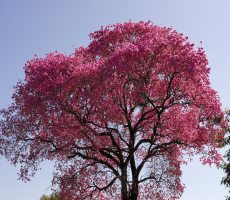
Pau d’arco is commonly recommended by herbalists to treat fungal, bacterial, and some parasitic infections. Initially, research showed that a compound in Pau d’arco, Lapachol, worked as an an effective anti-fungal and anti-viral. However, later research concluded that Lapachol alone was less effective than unrefined Pau d’arco. That implied that is was other compounds or a combination of compounds that was most effective against fungus and viruses. They determined that beta-lapachone and quercetin were also effective anti-fungal’s. They theorized that beta-lapachone inhibits certain enzymes that viruses need to grow and propagate.
Debra Gibson, N.D., a naturopathic doctor in Woodbury, Connecticut suggested that, “If that’s the case, having more beta-lapachone in our bodies would be an effective way to block viruses.”
There is still no concrete conclusion as to what it is in Pau d’arco that is lethal to fungus but it certainly is effective at killing the Candida Albicans fungus. While everyone has some Candida fungus in their body’s, sometimes it can get out of control. A weak immune system, diabetes, poor diet and other factors can lead to Candida. Taking antibiotics or anti-inflammatories can lead to the spread of Candida as well. Antibiotics can kills the good, as well as the bad, bacteria within your body which leaves less competition for the Candida albicans.
Candida can occur in the mouth, skin, respiratory system, or vagina and many people refer to it as a “yeast infection”.
Some doctors recommend utilizing Pau d’arco when you are on an antibiotic regimen. Others recommend it for women who have recurring yeast infections.
The evidence seems to suggest that Pau d’arco is effective against Candida. Below are some links to research and websites on Candida, Pau d’arco and Lapachol.
Gershon H.
Fungitoxicity of 1,4-naphthoquinonoes to Candida albicans and Trichophyton menta grophytes
Can J Microbiol 21, 1317-1321. 1975.
Binutu OA.
Antimicrobial potentials of some plant species of the Bignoniaceae family.
Afr J Med Med Sci. 1994 Sep;23(3):269-73.
Anesini C.
Screening of plants used in Argentine folk medicine for antimicrobial activity.
J Ethnopharmacol. 1993 Jun;39(2):119-28.
www.wdxcyber.com
Diagnosis, symptom and treatment information about candida (yeast) vaginitis that is evidence-based and referenced to the medical literature.